Last updated: November 2026
Pet insurance for Rhodesian Ridgebacks
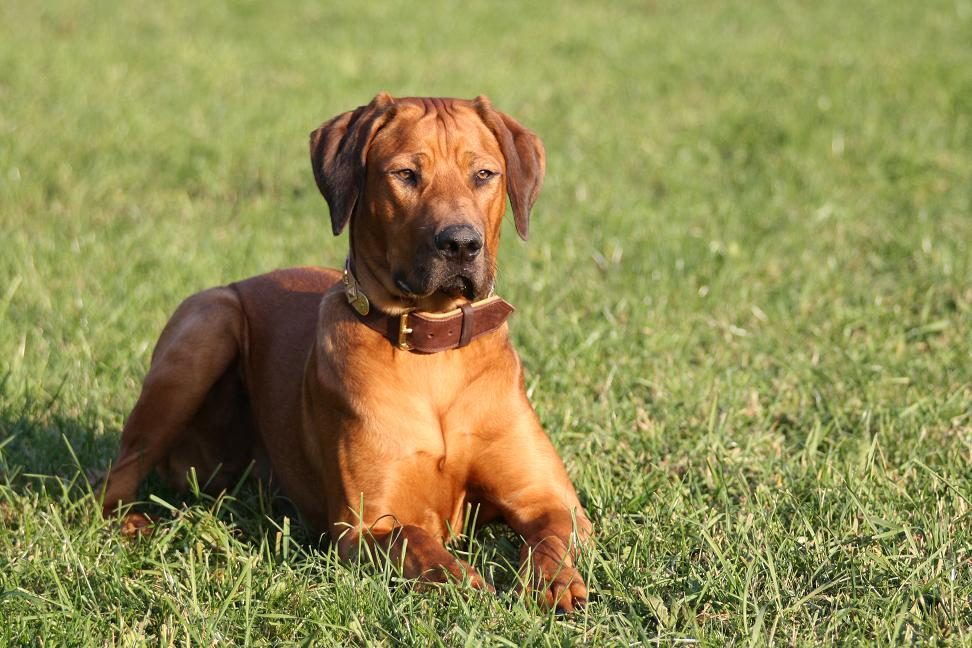
The Rhodesian Ridgeback is the dignified, strong-willed hound of southern Africa, famous for the strip of hair along its back that grows in the opposite direction. The original breed standard was drafted in Bulawayo, in what is now Zimbabwe, in 1922, and the AKC recognized the breed in its Hound Group in 1955. The AKC standard puts males at 25 to 27 inches and about 85 pounds, and females at 24 to 26 inches and about 70 pounds. How long a Ridgeback lives depends on how you count it, and this guide keeps the two published methods separate: the AKC lists life expectancy at 10 to 12 years, and a UK Kennel Club survey found a median age at death of 11 years among Ridgebacks whose deaths were reported. This is a genuinely hardy large breed, and its honest planning list is short: a breeder's dermoid sinus check on every puppy, a thyroid panel, screened joints that are genuinely good, DNA tests a breeder can settle early, and one deep-chested emergency every owner should be ready for without warning, on any ordinary night.
Enroll as a puppy, before any thyroid, joint or seizure note exists. In a healthy breed, the first vet note is the one that decides what a policy will cover for life.
Cost figures are typical ranges, not quotes or guarantees. Your premium depends on your ridgie's age, your zip code, and the deductible and reimbursement level you choose.
Common health issues in Rhodesian Ridgebacks
Dermoid sinus (the puppy check that matters)
Risk level: Common / expensive
The ridge itself carries this breed's defining puppy story. A 2007 study in Nature Genetics (Salmon Hillbertz et al.) found that a dominant duplication on chromosome 18, involving the genes FGF3, FGF4, FGF19 and ORAOV1, causes both the dorsal hair ridge and a predisposition to dermoid sinus, a congenital tube of skin that can extend inward from the back toward the spinal cord and needs surgery when it is found. How common it is depends on where and when you count, and this page prints both honest answers with their labels kept apart. Older Swedish records put dermoid sinus in about 8 to 10% of ridged offspring. A much larger German study of 12,700 Ridgeback puppies born from 2001 to 2019 in 1,622 litters found an overall prevalence of 2.5%, and 2.8% in litters with only ridged animals, falling steadily across those years. That is about 1 in 40 puppies in the modern German records. The Rhodesian Ridgeback Club of the United States Code of Ethics requires that dermoid surgery be performed before a puppy with a sinus is placed, and that puppies with serious defects be sterilized, so ask your breeder directly how every puppy in the litter was checked.
Bloat (gastric dilatation-volvulus)
Risk level: Common / expensive
Like every large, deep-chested breed, the Ridgeback carries a risk of bloat, where the stomach fills with gas and twists on itself. No Ridgeback-specific incidence figure was verified for this page, so none is printed; what matters is the shape of the emergency. A twisted stomach cuts off its own blood supply and becomes life-threatening within hours, so a restless, retching dog with a swelling belly is a same-night emergency, never a wait-until-morning call. Emergency surgery for this condition commonly runs $3,000 to $7,000 in the United States, printed here as a general emergency range, not a Ridgeback study figure. Standard accident-and-illness policies generally cover that emergency surgery; a preventive stomach-tacking procedure, called a gastropexy, usually is not covered, which is a conversation worth having with your vet long before you ever need it.
Hypothyroidism
Risk level: Common
Thyroid disease is the quiet adult story in this breed. In the Rhodesian Ridgeback Club of the United States health surveys, autoimmune hypothyroidism is the most commonly reported health problem in the breed, which is why a complete thyroid panel sits in the club's strongly recommended screening set for breeding dogs. No single breed prevalence percent is printed here, because the figures in circulation trace back to one summary that could not be re-verified against a primary source for this page. The lived version of the condition is manageable: a slowing, weight-gaining dog with a thinning coat takes a daily thyroid medication and returns for monitoring bloodwork, usually for life. It is rarely an emergency, but it is a real, recurring cost of loving this breed well, and one more reason the first thyroid note in a dog's record should arrive after a policy is already in place, not before.
Hip dysplasia
Risk level: Common
Hips are the honest good news in this breed. In Orthopedic Foundation for Animals data covering 1974 to 2019, 4.6% of 13,800 evaluated Rhodesian Ridgebacks were graded dysplastic, a genuinely low figure for a dog of this size. Those data come from dogs breeders chose to submit, mostly breeding stock, which understates the general pet population, and even with that label the Ridgeback screens far better than most large breeds. The breed club still requires final hip and elbow clearances, by OFA or a comparable registry, or a PennHIP evaluation of 0.30 or below, before a dog is bred, because low is not zero. When a hip does fail badly enough for surgery, the site-standard cost anchor applies: in a 2024 survey of 14 US hospitals published in the Journal of the American Veterinary Medical Association, total hip replacement in dogs averaged $7,064 (range $4,500 to $12,000), printed here as general dog data, not a Ridgeback figure.
Juvenile myoclonic epilepsy and the DNA tests
Risk level: Less common
Three inherited conditions in this breed sit behind DNA tests, and all three are a before-you-buy story. Juvenile myoclonic epilepsy is caused by a fully penetrant recessive deletion in the DIRAS1 gene (Wielaender et al., 2017, PNAS): affected puppies show myoclonic jerks, mainly during rest or drowsiness, with onset from 6 weeks to 18 months, and many progress to full seizures. The study cohort behind that paper was assembled to study the condition itself, so no breed prevalence is printed here. Early onset adult deafness brings progressive hearing loss starting at about 4 months of age, usually present by 1 to 2 years, and degenerative myelopathy is a late-onset spinal cord disease managed supportively. A DNA test exists for each of the three, the breed club encourages testing for all three, and carriers should only be bred to clear dogs, so ask for both parents' results by name.
What does pet insurance cost for a Rhodesian Ridgeback?
Start from the $62.44/month national dog average (NAPHIA, 2024 data) as an estimate only; there is no trustworthy Rhodesian Ridgeback specific price to quote here. The honest cost shape of this breed is not a fragile dog with a long disease list. Screened hip rates are genuinely low, and the value of a policy concentrates in one emergency (bloat surgery in a large, deep-chested dog), orthopedics in the unlucky minority, years of thyroid medication and monitoring if that common breed story arrives, and the puppy checks that should already have happened before your Ridgeback comes home. A dog who may live to 11 or 12 years on the published figures brings more senior care years than a shorter-lived giant breed. Asking for both parents' hip and elbow clearances, plus thyroid, eye and DNA results, and checking the actual results, is the single most useful buyer action this page can teach, because a CHIC number means the tests were done, not that the dog passed.
For context, the national average premium for dogs is roughly $62/month - but breed, age, and location move that number a lot. Estimate your premium with our cost calculator, or see the bigger picture in our lifetime cost projector, which compares a common emergency bill with and without coverage.
Breeder testing deserves its own plain telling, exactly as the parent club states it. Under the Rhodesian Ridgeback Club of the United States Code of Ethics, dogs bred over 24 months must have final screenings certified clear of hip and elbow dysplasia by OFA or a comparable registry, and a PennHIP evaluation of 0.30 or below is also acceptable for hips. The strongly recommended screenings in the CHIC program include a complete thyroid panel, cardiac certification, and an eye certification, with eye screening of breeding stock recommended annually until age 9. The club itself warns that a CHIC number only indicates that testing was done, not that the results were normal, so check the actual results, not just the number.
The living contract deserves plain words too. The AKC standard describes a dog that is strong, muscular and symmetrical, dignified and reserved with strangers, and breed references agree that a Ridgeback is strong-willed and not ideal for a first-time owner, while being even-tempered and devoted at home. A Ridgeback needs experienced handling, real training, exercise and company every day. For the right home that is the joy of the breed.
Large breeds keep each other's company on this site, and each keeps its own figures. Our German Shepherd insurance guide covers a large working breed whose hip story is very different from the low screened rates above. Our Labrador Retriever insurance guide and our Golden Retriever insurance guide cover two fellow large family breeds whose joint and cancer planning reward the same early start.
What to look for in a policy for a Rhodesian Ridgeback
- Enroll as a puppy, before any thyroid, joint or seizure note exists. In a healthy breed, the first vet note is the one that decides what a policy will cover for life.
- Confirm that hereditary conditions are covered, because dermoid sinus, juvenile myoclonic epilepsy and thyroid disease are this breed's inherited core.
- Choose a limit that could survive a bloat emergency in a large dog, because that single night is the realistic worst case in this breed.
- Ask the breeder for both parents' hip and elbow clearances, plus thyroid, eye and DNA results, and check the actual results, because a CHIC number alone is not a pass.
- Keep the deductible at a level you can pay on a hard day without hesitation - the policy only protects your dog if you can afford to use it.
Compare insurers for your ridgie
Typical plan options from major insurers:
| Insurer | Reimbursement | Annual limit | Waiting periods | Standout feature | Quote |
|---|---|---|---|---|---|
| Spot | 70%, 80% or 90% | $2,500 - unlimited | 14 days (accident & illness) | Preventive-care add-on available. | Get a quote |
| Trupanion | 90% | Unlimited payouts (no annual cap) | 5 days (injury) / 30 days (illness) | Per-condition lifetime deductible; direct vet payment option. | Get a quote |
| Embrace | 70%, 80% or 90% | $5,000 - $30,000 | No wait (accident) / 14 days (illness) / 6 mo (orthopedic, varies by state) | Deductible shrinks $50 each claim-free year. | Get a quote |
| Pets Best | 70%, 80% or 90% | $5,000 or unlimited | 3 days (accident) / 14 days (illness) / 6 mo (cruciate) | Wellness add-on; short accident waiting period. | Get a quote |
| Lemonade | 70%, 80% or 90% | $5,000 - $100,000 | No wait (accident, most states) / 14 days (illness) / 30 days (orthopedic) / 6 mo (cruciate) | Preventive packages; not offered in every state. | Get a quote |
| ASPCA Pet Health Insurance | 70%, 80% or 90% | Multiple annual-limit options | 14 days (accident & illness) | Preventive-care add-on available. | Get a quote |
| Figo | 70%, 80%, 90% or 100% | Up to unlimited annual max | 1 day (accident) / 14 days (illness) / 6 mo (orthopedic) | One of the few with a 100% reimbursement option. | Get a quote |
| Fetch | 70%, 80% or 90% | $5,000 - unlimited | No wait (accident) / 15 days (illness) / 6 mo (orthopedic) | Covers sick-visit exam fees. | Get a quote |
Plan options shown are typical ranges widely published by each insurer; details change and vary by state. Always confirm current terms on the insurer's website before enrolling. Quote buttons link directly to each insurer's website. We don't earn a commission on these links yet.
Other breed guides
- French Bulldog
- Labrador Retriever
- Golden Retriever
- German Shepherd
- Goldendoodle
- Dachshund
- Rottweiler
- Bulldog
- Cavalier King Charles Spaniel
- Shih Tzu
- Boxer
- Australian Shepherd
- German Shorthaired Pointer
- Pembroke Welsh Corgi
- Bernese Mountain Dog
- Border Collie
- Miniature Schnauzer
- Cocker Spaniel
- Yorkshire Terrier
- Great Dane
- Chihuahua
- Pug
- Havanese
- Boston Terrier
- Doberman Pinscher
- Vizsla
- Australian Cattle Dog
- Shetland Sheepdog
- English Springer Spaniel
- Belgian Malinois
- Bichon Frise
- Siberian Husky
- Cane Corso
- Dalmatian
- Chow Chow
- Akita
- Alaskan Malamute
Frequently asked questions
Is pet insurance worth it for a Rhodesian Ridgeback?
For most Rhodesian Ridgeback owners, yes - this is a breed where one major surgery can cost more than years of premiums. The math favors insurance most when the breed's common conditions are expensive, which is the case here.
When should I insure my Rhodesian Ridgeback?
As early as possible - ideally as a puppy. Conditions diagnosed before enrollment are excluded as pre-existing, and this breed's predispositions mean waiting is the expensive mistake.
What is the best pet insurance for Rhodesian Ridgebacks?
There is no single best insurer for every dog - the right pick depends on your budget, your dog's age, and which conditions worry you most. Compare annual limits, orthopedic waiting periods, and reimbursement rates across the table above, then run real quotes. (BreedCover may earn a commission if you buy through our links.)