Last updated: November 2026
Pet insurance for Akitas
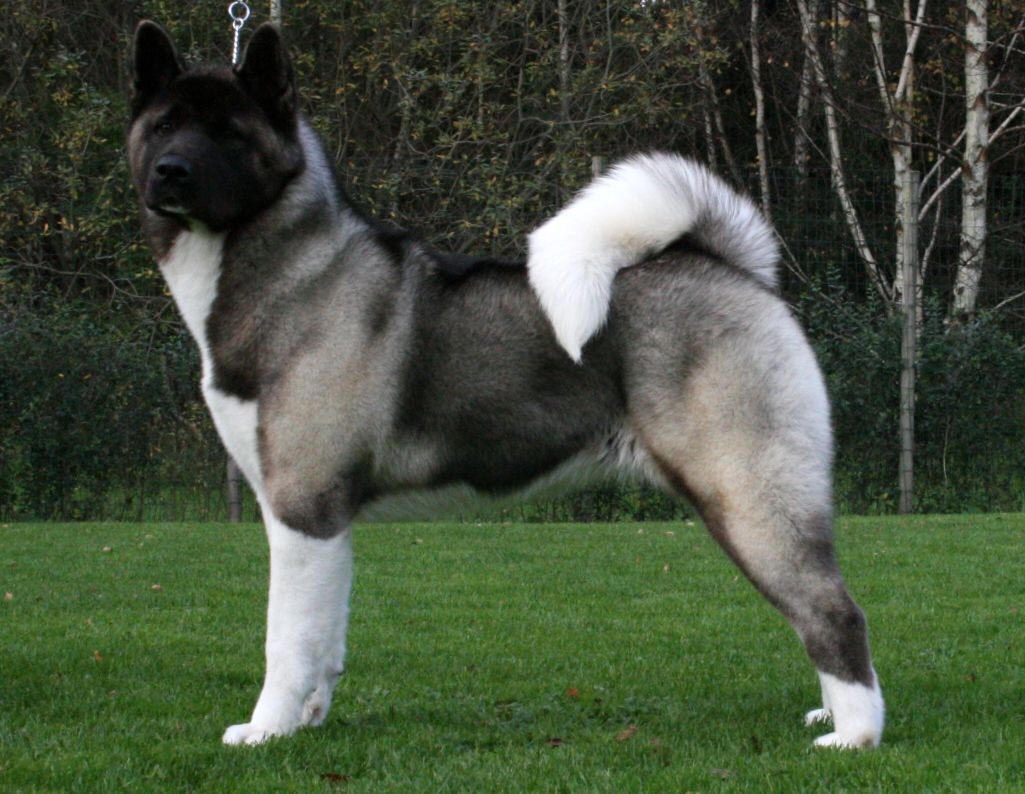
The Akita is the large, dignified guardian of the AKC Working Group, a powerful dog of much substance and heavy bone from Akita Prefecture in northern Japan, recognized by the AKC in 1972. The AKC lists males at 26 to 28 inches and 100 to 130 pounds, and females at 24 to 26 inches and 70 to 100 pounds. How long an Akita lives depends on how you count it, and this guide keeps the published methods separate: the AKC lists life expectancy at 10 to 14 years, while UK records measured a median lifespan of 11.4 years for Akitas, with the Japanese and American types pooled. This is a devoted, quietly courageous breed whose love is repaid with vigilance, because the conditions most likely to shape its care are slow, lifelong, immune-mediated ones that reward a family who enrolls early and watches closely, sitting alongside a screened hip concern, an inherited eye disease with no treatment, and a genuine bloat emergency risk in a deep-chested large dog.
Enroll as a puppy, before any skin, coat, or thyroid note is written down. In a breed predisposed to lifelong autoimmune conditions, a single early note about hair loss or a low thyroid reading can exclude the care your dog is most likely to need for the rest of its life.
Cost figures are typical ranges, not quotes or guarantees. Your premium depends on your akita's age, your zip code, and the deductible and reimbursement level you choose.
Common health issues in Akitas
Sebaceous adenitis
Risk level: Common / expensive
Sebaceous adenitis is this breed's signature skin disease, and it is told here exactly at the strength of its evidence. In Reichler et al. 2001 (Veterinary Dermatology), 97 pure-bred Akitas were examined clinically and histologically for the disease, and the diagnosis was established on biopsy in 23 of them, by showing an inflammatory reaction aimed at the sebaceous glands or a reduction in the number of glands; the authors state that an autosomal recessive inheritance appears to be possible. That 23 of 97 is a count inside an examined study sample assembled for the study, never a share of the breed at large, and this page never shortens it into one. A second population points the same way: in Tevell et al. 2008 (Acta Veterinaria Scandinavica), a review of 104 verified sebaceous adenitis cases in Swedish dogs, the Akita was among the most commonly recorded breeds, and veterinary dermatology references likewise name the Akita among the long-coated breeds in which the disease is recognized most often, with greasiness of skin and coat and frequent small bumps among its features in this breed. There is no cure. A skin biopsy confirms it, usually starting in young adult to middle-aged life, and care is a long-term program of skin and coat management, treatment of secondary infections, and immune-modulating medication for some dogs. A note about hair loss or scaling written before enrollment can follow this dog for life, which is why the timing on this page matters.
Bloat / gastric dilatation-volvulus (GDV)
Risk level: Common / expensive
Bloat is this breed's emergency, and its measured rate is among the highest ever recorded in a prospective study. In the Purdue prospective work by Glickman and colleagues, summarized in Bell 2014 (Topics in Companion Animal Medicine), 7 large and 4 giant breeds were followed and the Akita recorded an incidence of 25 cases of gastric dilatation-volvulus per 1,000 dog-years at risk, among the highest rates in that group, behind the Great Dane, Bloodhound, and Irish Wolfhound. A companion risk-factor study from the same program followed 1,637 dogs of 11 breeds, including 96 Akitas, and found risk rising with age, a first-degree relative with bloat, faster eating, and a raised feeding bowl; its 6% cumulative incidence describes the large and giant breeds combined, never Akitas alone, and this page keeps it labeled that way. A separate dataset summarized in a 2020 review in Genes found Akitas at 9.2% among the breeds most commonly affected; different population, different method, never merged with the Purdue figure into a single risk number. Bloat is a minutes-matter emergency, a swollen stomach that can twist, needing immediate veterinary care and emergency surgery, and emergency surgery is honestly a four to five figure event. Families should talk to their vet early about preventive gastropexy, especially at the spay or neuter visit.
Hip dysplasia
Risk level: Common
Hips have been a screened concern in this breed for decades, and the figures are told here with their eras attached. The Orthopedic Foundation for Animals hip registry's historical breed table records 15.2% dysplastic across 9,644 Akita evaluations from January 1974 to January 1996, with 13.3% rated excellent. A later compilation of the same registry through 2010 gives 12.8% dysplastic across 15,949 evaluations, with 18.9% rated excellent. Those are two snapshots of one registry population, drawn mostly from breeding stock, not two independent risks and never a lifetime probability for a pet puppy. A second system measures differently: the UK BVA and Kennel Club hip scheme gives the Akita a median hip score of 6.0 across 561 dogs scored in the last 15 years, with a 5-year median of 5.0, and a median score is not a percent and is never converted into one. Together they corroborate hips as a live, screened concern in two countries. What a buyer can stand behind today is the paperwork: both parents' hip evaluations, read directly, before a puppy comes home. If a hip does fail in a dog of this size, total hip replacement averaged $7,064 (range $4,500 to $12,000) in a 2024 survey of U.S. hospitals (JAVMA), printed here as a general surgical figure, and years of pain management can precede or replace surgery.
Hypothyroidism / autoimmune thyroiditis
Risk level: Common
The thyroid is this breed's lifelong monitoring story, told with no percent because none was verified. The Akita Club of America's health statement, hosted by the AKC, specifies the breed's thyroid screening test as autoimmune thyroiditis, evaluated by the OFA from an approved laboratory, and the AKC's Working Group health testing page lists a thyroid evaluation among the Akita's three recommended tests, which corroborates that the breed's thyroid concern is the autoimmune form vets screen breeding dogs for. Veterinary breed guides describe the same picture: hypothyroidism in Akitas is predominantly an autoimmune disorder in which the immune system attacks the thyroid gland, with weight gain, lethargy, thinning coat, and skin change as the classic signs. Blood tests confirm it, and then care is daily thyroid hormone and periodic monitoring bloodwork for life. It is rarely an emergency, but it repeats every year, and the first thyroid note in a dog's record should arrive after a policy is already in place, not before.
Pemphigus foliaceus and autoimmune skin disease
Risk level: Less common
Pemphigus foliaceus is the autoimmune skin disease this breed is quietly predisposed to, told here at the strength of its evidence. LABOKLIN's veterinary dermatology reference calls it the most common autoimmune skin disease in dogs and cats and names Akita Inus and Chow Chows as the breeds that appear to be at particularly high risk, and the University of Minnesota's dermatology handbook states the same predisposition pairing; a Clinician's Brief review lists the same two breeds among its predispositions, with a median age of onset of 4 years. No incidence percent was verified for this breed, so none is printed, and the honest framing matters: this is a rare but serious immune-mediated skin disease of pustules and crusts, usually starting on the face and ears, diagnosed by biopsy and managed with long-term immune suppression. Together with sebaceous adenitis above, it makes the coverage wording on immune-mediated and hereditary skin disease a concrete thing for an Akita family to read in writing before enrolling, because the care, when it comes, repeats across policy years.
Progressive retinal atrophy (PRA)
Risk level: Less common
Progressive retinal atrophy is the inherited eye disease in this breed's file, and its care story is screening and adaptation, because no treatment exists. The MSD Veterinary Manual's retinal disorders chapter names Akitas among the breeds in which inherited photoreceptor degeneration develops, with signs at 3 to 5 years; the first sign is usually night blindness, progressing to total blindness over months to years, and the condition can be confirmed by electroretinography. PetMD's guide to the disease lists the Akita among the breeds at higher risk for late or adult-onset PRA, describes the usual autosomal recessive inheritance, and notes that affected dogs are typically blind within 1 to 2 years after signs begin. An early case series (Toole and Roberts 1984) described generalized PRA in related young adult Akitas and suggested the condition is heritable in the breed, so this is a long-recognized concern, not a new claim. No breed prevalence percent was verified, so none is printed. The practical plan is a yearly eye examination by a veterinary ophthalmologist, prompt reporting of any hesitation in dim light, and a home kept familiar and safe as vision fades.
What does pet insurance cost for an Akita?
Start from the $62.44/month national dog average (NAPHIA, 2024 data) as an estimate only; there is no trustworthy Akita specific price to quote here. A large breed like this will usually be quoted at or above that average, and the honest cost shape concentrates in lifelong, predictable autoimmune care, daily thyroid medication and monitoring and long-term skin programs, in joint care across a measured 11.4 year median life, and in the small but real chance of a bloat emergency. Asking for both parents' hip scores, a current eye exam, and thyroid results, and checking the actual results, is the single most useful buyer action this page can teach, because a CHIC number means the tests were done, not that the dog passed.
For context, the national average premium for dogs is roughly $62/month - but breed, age, and location move that number a lot. Estimate your premium with our cost calculator, or see the bigger picture in our lifetime cost projector, which compares a common emergency bill with and without coverage.
Breeder testing for this breed has a clear required set, verified against the breed club statement and the AKC. The Akita Club of America's CHIC requirements are a hip evaluation (OFA evaluation or PennHIP evaluation), an eye examination by a boarded ACVO ophthalmologist each year until age 6 and every 2 years after that, with results registered with OFA or CERF, and an autoimmune thyroiditis evaluation by the OFA from an approved laboratory. An elbow evaluation and a patellar luxation evaluation are listed as optional. The AKC's Working Group health testing page lists the same three core tests, a hip evaluation, an ophthalmologist evaluation, and a thyroid evaluation. So the papers to ask for are both parents' hip scores, a current eye exam, and thyroid results, plus a direct question about sebaceous adenitis, pemphigus, and bloat in the breeder's lines, since no screening test exists for those. A CHIC number means those tests were done and the results are public, not that the dog passed, so read the actual results on both parents.
The coat deserves its own honest paragraph, because grooming is also this breed's early warning system. An Akita carries a dense double coat, coarse and straight on the outside with a soft, dense undercoat, and sheds heavily in seasonal coat blows. Regular brushing and skin checks worked into grooming are how a family spots the early scaling, crusting, and hair loss of the skin conditions above while they are still small. One more thread in the breed's wider autoimmune theme deserves a prompt vet visit on its own: a VKH-like uveodermatologic syndrome is named in breed club material for this breed, an immune condition that can involve the eyes and the skin together, so eye and skin changes arriving at the same time in an Akita should never wait.
Working breeds keep each other's company on this site, and each keeps its own figures. Our German Shepherd insurance guide covers a large working breed whose hip story is told with its own registry figures. Our Rottweiler insurance guide covers a fellow Working guardian whose joint and cancer planning rewards the same early start. Our Siberian Husky insurance guide covers a snow-country Working breed whose planning story starts with young-onset eye diseases. And our Chow Chow insurance guide covers the breed that shares this one's pemphigus predisposition pairing, told with its own figures.
What to look for in a policy for an Akita
- Enroll as a puppy, before any skin, coat, or thyroid note is written down. In a breed predisposed to lifelong autoimmune conditions, a single early note about hair loss or a low thyroid reading can exclude the care your dog is most likely to need for the rest of its life.
- Confirm that hereditary and immune-mediated conditions are covered, and ask in writing how autoimmune skin disease and autoimmune thyroiditis are treated across policy years, because both are managed for life, not for a single visit.
- Confirm that bloat and emergency surgery are covered, and ask about any large-breed or bloat exclusions or waiting periods, because this emergency can arrive in an otherwise healthy young adult.
- Confirm that joint conditions are covered, and ask about orthopedic waiting periods, because hips are a screened, lifelong concern in this breed.
- Ask the breeder for both parents' hip scores, a current eye exam, and thyroid results, and ask directly about sebaceous adenitis, pemphigus, and bloat in the breeder's lines, and check the actual results, because a CHIC number alone is not a pass.
- Keep the deductible at a level you can pay on a hard day without hesitation - the policy only protects your dog if you can afford to use it.
Compare insurers for your akita
Typical plan options from major insurers:
| Insurer | Reimbursement | Annual limit | Waiting periods | Standout feature | Quote |
|---|---|---|---|---|---|
| Spot | 70%, 80% or 90% | $2,500 - unlimited | 14 days (accident & illness) | Preventive-care add-on available. | Get a quote |
| Trupanion | 90% | Unlimited payouts (no annual cap) | 5 days (injury) / 30 days (illness) | Per-condition lifetime deductible; direct vet payment option. | Get a quote |
| Embrace | 70%, 80% or 90% | $5,000 - $30,000 | No wait (accident) / 14 days (illness) / 6 mo (orthopedic, varies by state) | Deductible shrinks $50 each claim-free year. | Get a quote |
| Pets Best | 70%, 80% or 90% | $5,000 or unlimited | 3 days (accident) / 14 days (illness) / 6 mo (cruciate) | Wellness add-on; short accident waiting period. | Get a quote |
| Lemonade | 70%, 80% or 90% | $5,000 - $100,000 | No wait (accident, most states) / 14 days (illness) / 30 days (orthopedic) / 6 mo (cruciate) | Preventive packages; not offered in every state. | Get a quote |
| ASPCA Pet Health Insurance | 70%, 80% or 90% | Multiple annual-limit options | 14 days (accident & illness) | Preventive-care add-on available. | Get a quote |
| Figo | 70%, 80%, 90% or 100% | Up to unlimited annual max | 1 day (accident) / 14 days (illness) / 6 mo (orthopedic) | One of the few with a 100% reimbursement option. | Get a quote |
| Fetch | 70%, 80% or 90% | $5,000 - unlimited | No wait (accident) / 15 days (illness) / 6 mo (orthopedic) | Covers sick-visit exam fees. | Get a quote |
Plan options shown are typical ranges widely published by each insurer; details change and vary by state. Always confirm current terms on the insurer's website before enrolling. Quote buttons link directly to each insurer's website. We don't earn a commission on these links yet.
Other breed guides
- French Bulldog
- Labrador Retriever
- Golden Retriever
- German Shepherd
- Goldendoodle
- Dachshund
- Rottweiler
- Bulldog
- Cavalier King Charles Spaniel
- Shih Tzu
- Boxer
- Australian Shepherd
- German Shorthaired Pointer
- Pembroke Welsh Corgi
- Bernese Mountain Dog
- Border Collie
- Miniature Schnauzer
- Cocker Spaniel
- Yorkshire Terrier
- Great Dane
- Chihuahua
- Pug
- Havanese
- Boston Terrier
- Doberman Pinscher
- Vizsla
- Australian Cattle Dog
- Shetland Sheepdog
- English Springer Spaniel
- Belgian Malinois
- Rhodesian Ridgeback
- Bichon Frise
- Siberian Husky
- Cane Corso
- Dalmatian
- Chow Chow
- Alaskan Malamute
Frequently asked questions
Is pet insurance worth it for an Akita?
For most Akita owners, yes - this is a breed where one major surgery can cost more than years of premiums. The math favors insurance most when the breed's common conditions are expensive, which is the case here.
When should I insure my Akita?
As early as possible - ideally as a puppy. Conditions diagnosed before enrollment are excluded as pre-existing, and this breed's predispositions mean waiting is the expensive mistake.
What is the best pet insurance for Akitas?
There is no single best insurer for every dog - the right pick depends on your budget, your dog's age, and which conditions worry you most. Compare annual limits, orthopedic waiting periods, and reimbursement rates across the table above, then run real quotes. (BreedCover may earn a commission if you buy through our links.)