Last updated: November 2026
Pet insurance for Doberman Pinschers
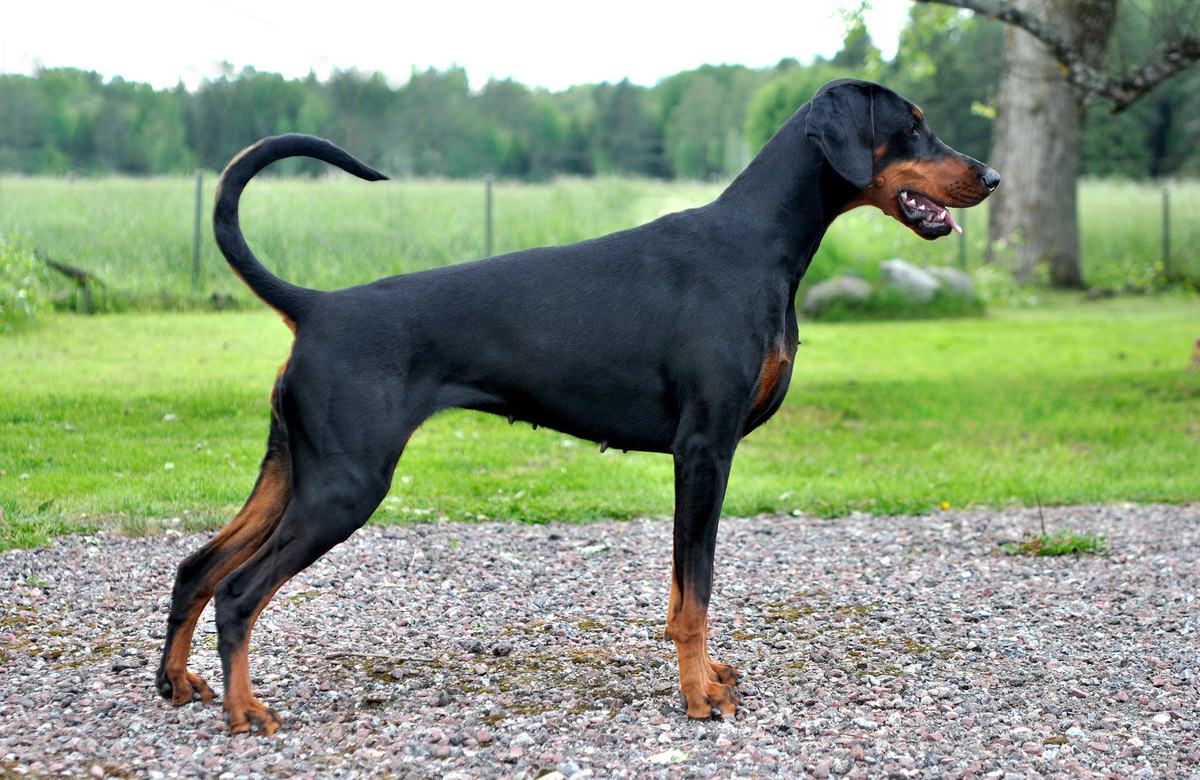
A sleek, square, deeply loyal guardian in the AKC Working Group, recognized by the AKC in 1908: dogs stand 26 to 28 inches at the withers, ideal about 27.5 inches, and bitches 24 to 26 inches, ideal about 25.5 inches, with the AKC breed profile listing males at 75 to 100 pounds and females at 60 to 90 pounds. How long a Doberman Pinscher lives depends on how you count it, and this guide keeps the two published methods separate, each with its label: the AKC lists life expectancy at 10 to 12 years, and a large UK study put the median lifespan at 11.2 years. The honest heart of this breed's story arrives early: an inherited heart condition, dilated cardiomyopathy, shows up in more than half of carefully screened European Dobermans, and it rewards annual screening and early insurance more than almost any condition on this site. The rest of the story is a bleeding condition that is genetically common but usually mild, a standout thyroid risk, a neck spine condition of middle age, and the breeder tests that check all of them.
Enroll as a puppy, before the first echocardiogram, Holter recording, or thyroid note exists. In this breed the most expensive condition can be silently present for years, and the first abnormal recording, whenever it happens, closes the door permanently.
Cost figures are typical ranges, not quotes or guarantees. Your premium depends on your dobie's age, your zip code, and the deductible and reimbursement level you choose.
Common health issues in Doberman Pinschers
Dilated cardiomyopathy (DCM)
Risk level: Common / expensive
Heart comes first in this breed, and it is not close. Dilated cardiomyopathy is an inherited disease in Doberman Pinschers in which the heart muscle weakens and the heart enlarges, and it can be present and silent for years before any sign appears. In a prospective study of 412 European Doberman Pinschers given 775 examinations, each including echocardiography and a 24 hour Holter ECG recording (Wess and colleagues, Journal of Veterinary Internal Medicine, 2010), the cumulative prevalence was 58.2%, calculated from all dogs with cardiomyopathy against healthy dogs older than 7 years. The age gradient tells the screening story: 3.3% at 1 to under 2 years, 9.9% at 2 to under 4 years, 12.5% at 4 to under 6 years, 43.6% at 6 to under 8 years, and 44.1% over 8 years. That 58.2% is a screening figure, found by looking carefully with both tests, including hidden (occult) disease. Hospital databases that count only diagnosed cases find far lower shares, 5.8% in the Purdue Veterinary Medical Database and 7.3% in a US study, because most hidden cases are never found without screening. What you find depends on whether you look, which is the whole argument for screening. The European Society of Veterinary Cardiology screening guidelines (Wess and colleagues, 2017) recommend both an echocardiogram and a 24 hour Holter recording every year for life, starting in early adulthood, because one normal screen cannot rule out future disease: fewer than 50 ventricular premature contractions in 24 hours is considered normal, while more than 300, or two recordings within a year showing between 50 and 300, is diagnostic of hidden DCM even when the echocardiogram looks normal. A clear DNA result is not a cardiac clearance: the guidelines do not include genetic testing in the screening protocol, and the US gene variants were not associated with DCM in European Dobermans in the studies reviewed. For cost, 2025 national cost research puts an echocardiogram at about $415 on average, with a range of $331 to $805, and a full specialty cardiac workup commonly runs $600 to $1,400, repeated every year. If DCM develops, care means lifelong cardiac medication and repeat monitoring, and that long road is why this breed's insurance decision matters so much.
Von Willebrand disease Type I
Risk level: Common
Von Willebrand disease Type I is a bleeding condition in which the blood carries too little of a clotting factor, and in Dobermans it is genetically very common yet clinically usually mild, and both halves of that sentence matter. In US tested dogs reported by the VetGen laboratory, 26 to 35% carried two copies of the mutation, 48 to 49% carried one copy, and 16 to 25% were clear. The real bleeding risk concentrates in dogs with two copies: in an Australian study of 614 Dobermans classified by blood factor levels before genetic testing existed (Stokol and colleagues, 1995), bleeding episodes were mostly mild or moderate, though eight dogs bled severely and two died, and of 373 Dobermans with factor levels under 50% of normal, 107 had had a bleeding episode. Dogs with one copy are usually silent or mildly affected, which is why the practical moments are surgery, injury, and whelping, when a vet who knows the dog's status plans differently. A DNA test settles a dog's status once in its life, and the breed club's CHIC program requires that test, from an approved laboratory, with results registered with OFA, so ask a breeder for both parents' results.
Hypothyroidism
Risk level: Common
Thyroid comes next, because this breed's measured risk is the highest in the best primary care data available. In a VetCompass study of UK primary care records from 2016, covering 905,553 dogs with 2,105 diagnosed hypothyroidism cases (O'Neill and colleagues, 2022), the Standard Doberman Pinscher had the highest breed odds of diagnosed hypothyroidism of any breed studied, at 17.02 times the odds of crossbred dogs. That is an odds ratio from one year of UK primary care, not a lifetime chance, and this page prints it with that label. The condition usually arrives in middle age, at about 7 years in general hypothyroid populations, with weight gain, a thinning coat, lethargy, and skin problems among the familiar signs. Fewer than 30% of hypothyroid Dobermans test positive for the usual thyroid antibody, so a negative antibody result does not rule the disease out in this breed. The breed club's CHIC program requires a thyroid evaluation through OFA from an approved laboratory. Treatment is daily thyroid replacement for life, with periodic blood tests to keep the dose right: manageable, unglamorous, and permanent, which is exactly the kind of cost a good policy quietly absorbs year after year.
Cervical spondylomyelopathy (Wobbler syndrome)
Risk level: Common
Cervical spondylomyelopathy, called Wobbler syndrome for the wobbly, unsteady hind end gait it causes, is a neck spine condition in which compression of the spinal cord, most commonly at C5/C6 or C6/C7, slowly steals a dog's coordination. Dobermans are the breed most associated with the disc form of the disease: in one MRI confirmed case series of 63 dogs with disc associated disease, 44 were Doberman Pinschers, and males were overrepresented. Survey and database figures put the breed share at about 5% to 5.5% of Dobermans, labeled as what they are: about 5% in one survey, and 5.5% in a US Veterinary Medical Database analysis (Da Costa, 2011). Dogs are typically middle aged when signs appear, at a median of 7.2 years in that case series, and males are affected about twice as often as females. In most Dobermans the course is slowly progressive, though a minority worsen suddenly. Diagnosis needs a specialist neurology workup and an MRI, and management runs from medication and activity control to neck surgery in progressive cases. No two source surgery cost figure was verified for this condition, so this page keeps Wobbler costs honest and qualitative rather than inventing a number.
Hip dysplasia
Risk level: Less common
Hips are a real but comparatively modest risk in this breed, and the two best populations read very differently, which is itself the lesson. In the complete OFA hip registry for the United States and Canada through April 2015 (Loder and Todhunter, 2017), 5.1% of Doberman Pinschers submitted were rated dysplastic, against 15.6% across all dogs in the same registry. In a US veterinary teaching hospital radiograph population (Witsberger and colleagues, 2008), the figure was 1.3%. A breeder submitted registry and a hospital population measure different dogs in different ways, so neither number is an individual pet's lifetime chance. The breed club's CHIC program still requires a hip evaluation, by OFA or PennHIP, for both parents, and comparatively good numbers are not the same as untested: ask for both parents' results.
What does pet insurance cost for a Doberman Pinscher?
Start from the $62.44/month national dog average (NAPHIA, 2024 data) as an estimate only; there is no trustworthy Doberman Pinscher specific price to quote here, and this breed is priced on its heart. The value of a policy concentrates in the annual echocardiogram and Holter screening commitment from early adulthood, lifelong cardiac medication and monitoring if dilated cardiomyopathy develops, specialist imaging and possible neck surgery for Wobbler syndrome in the middle years, lifelong thyroid management, and surgical planning that has to account for von Willebrand status. Because the breed's most expensive condition is inherited, can be present and silent for years, and is excluded forever once it is recorded, enrolling as a puppy and reading the hereditary conditions wording carefully matter more on this page than on almost any other breed page on this site.
For context, the national average premium for dogs is roughly $62/month - but breed, age, and location move that number a lot. Estimate your premium with our cost calculator, or see the bigger picture in our lifetime cost projector, which compares a common emergency bill with and without coverage.
Three smaller notes belong in every Doberman Pinscher buyer's file. Eyes: progressive retinal atrophy, a slow inherited loss of vision that begins at dusk, is a listed inherited condition in this breed, which is why the CHIC program requires an eye examination by a board certified veterinary ophthalmologist. Color: a white Doberman is not a rare or premium color. Albinism is a disqualifying genetic fault under the breed standard, the breed club opposes breeding albino Dobermans, and the verified health notes are light sensitivity and a higher risk of skin lesions and tumors. Liver: Dobermans, particularly females, carry a predisposition to a copper associated chronic hepatitis, usually diagnosed in middle age, so persistently raised liver enzymes in a Doberman deserve follow through rather than watchful forgetting.
A fellow working breed joins this one here. Our Siberian Husky insurance guide covers a sled dog whose eye-first planning story, lifelong skin condition, and low screened hip rates are told with its own figures.
Another working guardian joins this one here. Our Cane Corso insurance guide covers a giant Italian mastiff whose joint, bloat, and eyelid planning rewards the same early start.
What to look for in a policy for a Doberman Pinscher
- Enroll as a puppy, before the first echocardiogram, Holter recording, or thyroid note exists. In this breed the most expensive condition can be silently present for years, and the first abnormal recording, whenever it happens, closes the door permanently.
- Confirm that hereditary conditions are covered, with dilated cardiomyopathy named in your own reading of the policy, and ask how hidden, screening detected disease is treated under the plan.
- Confirm that cardiac screening and monitoring, echocardiograms and Holter recordings, are covered as diagnostics rather than excluded as breeding tests, because this breed needs them every year.
- Ask for both parents' full CHIC results: hip evaluation, a current advanced cardiac exam, thyroid evaluation, von Willebrand DNA test, eye examination, and working aptitude evaluation, and treat a breeder who cannot show a current cardiac result as the risk signal it is.
- Keep the deductible at a level you can pay on a hard day without hesitation - the policy only protects your dog if you can afford to use it.
Compare insurers for your dobie
Typical plan options from major insurers:
| Insurer | Reimbursement | Annual limit | Waiting periods | Standout feature | Quote |
|---|---|---|---|---|---|
| Spot | 70%, 80% or 90% | $2,500 - unlimited | 14 days (accident & illness) | Preventive-care add-on available. | Get a quote |
| Trupanion | 90% | Unlimited payouts (no annual cap) | 5 days (injury) / 30 days (illness) | Per-condition lifetime deductible; direct vet payment option. | Get a quote |
| Embrace | 70%, 80% or 90% | $5,000 - $30,000 | No wait (accident) / 14 days (illness) / 6 mo (orthopedic, varies by state) | Deductible shrinks $50 each claim-free year. | Get a quote |
| Pets Best | 70%, 80% or 90% | $5,000 or unlimited | 3 days (accident) / 14 days (illness) / 6 mo (cruciate) | Wellness add-on; short accident waiting period. | Get a quote |
| Lemonade | 70%, 80% or 90% | $5,000 - $100,000 | No wait (accident, most states) / 14 days (illness) / 30 days (orthopedic) / 6 mo (cruciate) | Preventive packages; not offered in every state. | Get a quote |
| ASPCA Pet Health Insurance | 70%, 80% or 90% | Multiple annual-limit options | 14 days (accident & illness) | Preventive-care add-on available. | Get a quote |
| Figo | 70%, 80%, 90% or 100% | Up to unlimited annual max | 1 day (accident) / 14 days (illness) / 6 mo (orthopedic) | One of the few with a 100% reimbursement option. | Get a quote |
| Fetch | 70%, 80% or 90% | $5,000 - unlimited | No wait (accident) / 15 days (illness) / 6 mo (orthopedic) | Covers sick-visit exam fees. | Get a quote |
Plan options shown are typical ranges widely published by each insurer; details change and vary by state. Always confirm current terms on the insurer's website before enrolling. Quote buttons link directly to each insurer's website. We don't earn a commission on these links yet.
Other breed guides
- French Bulldog
- Labrador Retriever
- Golden Retriever
- German Shepherd
- Goldendoodle
- Dachshund
- Rottweiler
- Bulldog
- Cavalier King Charles Spaniel
- Shih Tzu
- Boxer
- Australian Shepherd
- German Shorthaired Pointer
- Pembroke Welsh Corgi
- Bernese Mountain Dog
- Border Collie
- Miniature Schnauzer
- Cocker Spaniel
- Yorkshire Terrier
- Great Dane
- Chihuahua
- Pug
- Havanese
- Boston Terrier
- Vizsla
- Australian Cattle Dog
- Shetland Sheepdog
- English Springer Spaniel
- Belgian Malinois
- Rhodesian Ridgeback
- Bichon Frise
- Siberian Husky
- Cane Corso
- Dalmatian
- Chow Chow
- Akita
- Alaskan Malamute
Frequently asked questions
Is pet insurance worth it for a Doberman Pinscher?
For most Doberman Pinscher owners, yes - this is a breed where one major surgery can cost more than years of premiums. The math favors insurance most when the breed's common conditions are expensive, which is the case here.
When should I insure my Doberman Pinscher?
As early as possible - ideally as a puppy. Conditions diagnosed before enrollment are excluded as pre-existing, and this breed's predispositions mean waiting is the expensive mistake.
What is the best pet insurance for Doberman Pinschers?
There is no single best insurer for every dog - the right pick depends on your budget, your dog's age, and which conditions worry you most. Compare annual limits, orthopedic waiting periods, and reimbursement rates across the table above, then run real quotes. (BreedCover may earn a commission if you buy through our links.)