Last updated: November 2026
Pet insurance for Cocker Spaniels
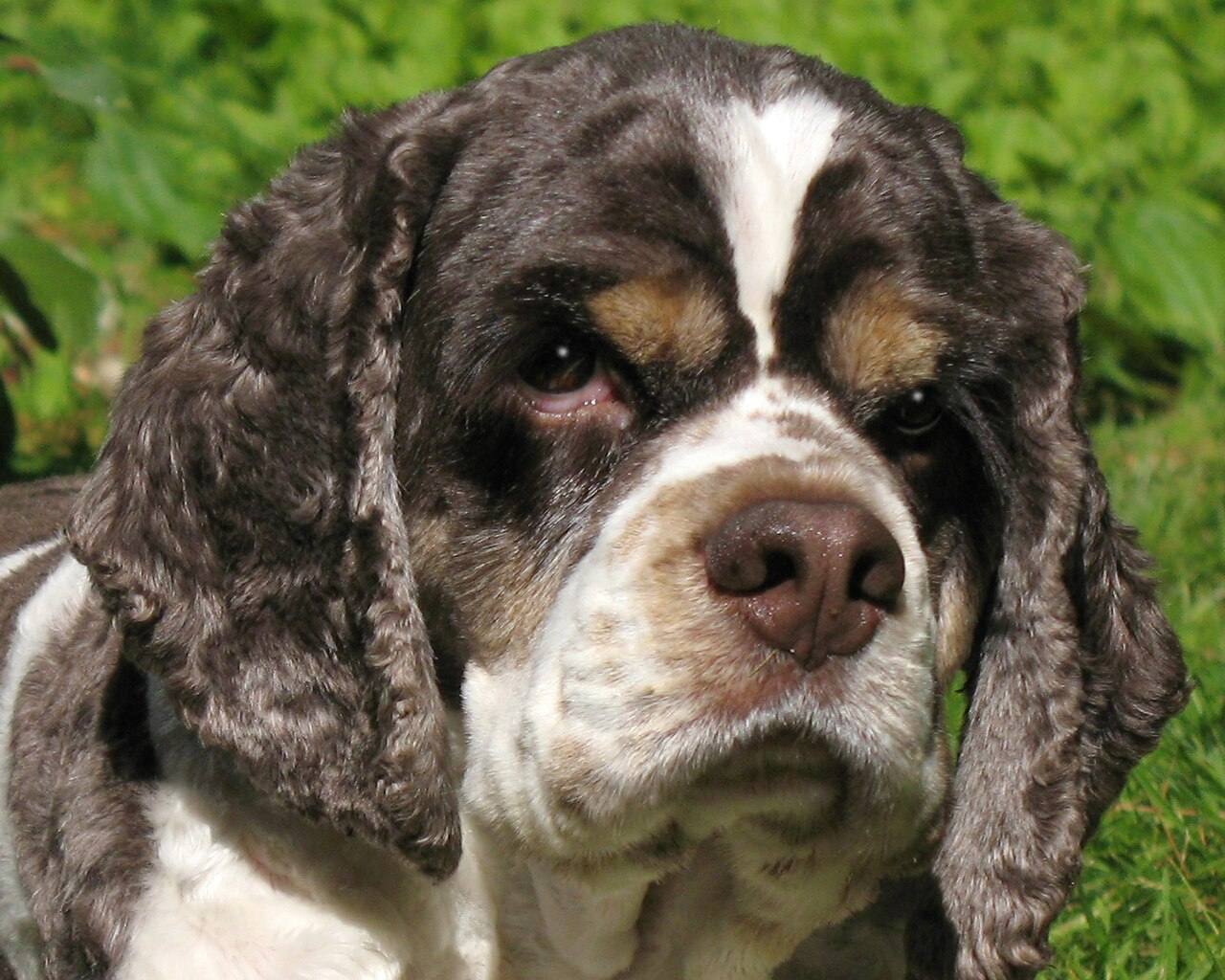
The smallest spaniel in the AKC Sporting Group, merry, gentle, and devoted, with a silky coat and long, low ears that ask for daily care. The AKC registers this breed simply as the Cocker Spaniel; internationally it is the American Cocker Spaniel, split from the English Cocker Spaniel in 1946. The AKC lists life expectancy at 10 to 14 years, and UK VetCompass life tables put life expectancy at birth at 11.3 years for Cocker Spaniels in a UK population of predominantly English Cockers. The honest planning story for this breed is ears first and eyes second, with a short list of inherited conditions where a screening exam or a DNA test tells you more than any statistic.
Enroll as a puppy, before the first ear infection or eye finding is in the records. In this breed the first vet note usually arrives young, and everything after it is pre-existing.
Cost figures are typical ranges, not quotes or guarantees. Your premium depends on your cocker spaniel's age, your zip code, and the deductible and reimbursement level you choose.
Common health issues in Cocker Spaniels
Ear disease (otitis externa)
Risk level: Common / expensive
The breed's signature problem, and the shape of the ear explains it: heavy, low hanging, hairy ear canals stay warm and damp, and infection follows. In a UK VetCompass study of 22,333 dogs, Cocker Spaniels had 1.67 times the odds of ear infection of crossbred dogs (95% CI 1.29 to 2.17), against a one year prevalence of 7.3% across all dogs in the study, and dogs with pendulous ear carriage overall had 1.76 times the odds of dogs with erect ears. Those figures come from a UK population labeled Cocker Spaniel, predominantly the English type; in a VetCompass study of English Cockers alone, ear infection was recorded in 10.1% of dogs in a year. No verified US prevalence figure exists, so this page prints none. Most ear care is years of cleaning, drops, and repeat vet visits. At the rare end of that road, surgery to remove the ear canal (total ear canal ablation) for end stage disease runs $3,500 to $4,400 per ear in an insurer's 2025 cost guide, and one US veterinary surgery service lists $3,800 for one ear and $5,500 for both, printed here as guide and clinic figures.
Eye conditions
Risk level: Common / expensive
Eyes are the second story in this breed, and the inherited list is agreed by both the European College of Veterinary Ophthalmologists manual and the American College of Veterinary Ophthalmologists genetics committee: glaucoma, cataracts, progressive retinal atrophy of the prcd type, retinal dysplasia, distichiasis, entropion and ectropion, and dry eye are all known or presumed inherited in the American Cocker. Primary angle closure glaucoma has been reported at about 5 to 5.5% in North American hospital survey data, and the American Cocker is the breed most commonly affected. In eye exam populations, posterior polar cataracts were found in 4.3% of 1,129 Cocker Spaniels examined in 2013 and 3.1% of 1,085 examined in 2022; those are shares of examined dogs, not lifetime rates. A DNA test exists for prcd progressive retinal atrophy, which is inherited as an autosomal recessive trait. When cataracts badly cloud vision, published guides put surgery at roughly $2,700 to $4,000 per eye, and a 2025 national cost study averaged $3,782 per eye.
Immune-mediated hemolytic anemia (IMHA)
Risk level: Common
A sudden immune attack on the dog's own red blood cells, and a verified breed predisposition: a 72 dog retrospective study found Cocker Spaniels at significantly increased risk, and a University Federation for Animal Welfare synthesis of the literature confirms the predisposition in English and American Cockers while stating plainly that no data on the proportion affected are known, so this page prints no percent. It tends to appear in middle aged dogs, and females are over represented. The insurance point is the shape of the emergency rather than a statistic: IMHA arrives without warning and is an intensive care level illness, which is an argument for a limit that can carry days of hospital care.
Skin: primary seborrhea
Risk level: Common
An inherited skin condition this breed is known for, listed among the predisposed breeds in the University of Minnesota dermatology handbook and described by WikiVet as a common inherited skin disorder seen most frequently in Cocker Spaniels. In seborrheic Cockers, the skin renews itself in about 8 days instead of the usual 21 days, which is why the coat turns greasy and flaky and the skin stays prone to secondary infection. Signs usually appear by about 2 years of age. There is no cure, only steady management, so the real cost is years of medicated baths, vet checks, and treatment for flare ups that often arrive alongside the ear problems above. No trustworthy prevalence figure exists, so this page prints none.
Hip dysplasia
Risk level: Less common
A screening breed with a modest verified risk. Hip evaluation, alongside an eye exam by a board certified veterinary ophthalmologist, is a core health screen for Cocker breeding stock in the CHIC program run with the Orthopedic Foundation for Animals and the American Spaniel Club, and a CHIC number means the tests were completed and the results made public, not that the results were normal. Marketing figures for this breed's hip rate could not be corroborated against a primary source, so this page prints the screening point and no percent. Ask a breeder for the parents' hip and eye results; that paperwork is worth more than any breed average.
Breeder panel conditions: PFK deficiency and the CDDY gene
Risk level: Less common
Two inherited findings a good breeder tests for, and neither is a likely vet bill for a pet owner whose breeder did the testing. Phosphofructokinase (PFK) deficiency is caused by a nonsense mutation in the PFKM gene, inherited as an autosomal recessive trait; affected dogs tire easily, with muscle fatigue, weakness, and cramping on exercise, and care is supportive, since there is no cure. DNA tests for PFK deficiency are offered for the American Cocker, in testing bundles that also cover prcd progressive retinal atrophy. The breed also carries the chondrodystrophy (CDDY) gene linked to disc disease in many breeds, the University of California, Davis lists the American Cocker Spaniel as an appropriate breed for CDDY testing, and a DNA test exists. No carrier or prevalence figure for either finding could be verified in two sources, so this page prints none.
What does pet insurance cost for a Cocker Spaniel?
Start from the $62.44/month national dog average (NAPHIA, 2024 data) as an estimate only; Cocker Spaniels are a small breed (males 14.5 to 15.5 inches and 25 to 30 pounds, females 13.5 to 14.5 inches and 20 to 25 pounds, per the AKC standard), so quotes often sit near that average, and there is no trustworthy breed-specific price to quote here. The value of a policy concentrates in years of recurring ear and skin care, in one eye surgery pattern, and in rare but severe emergencies such as immune-mediated hemolytic anemia, while the inherited panel conditions are mainly a breeder conversation, not a claims story.
For context, the national average premium for dogs is roughly $62/month - but breed, age, and location move that number a lot. Estimate your premium with our cost calculator, or see the bigger picture in our lifetime cost projector, which compares a common emergency bill with and without coverage.
Spaniel ears are a shared conversation on this site. Our English Springer Spaniel insurance guide covers the Cocker's larger spaniel peer, whose ear risk is the strongest verified figure in its guide and whose hip, elbow and DNA panel story is told with its own figures, kept strictly separate from the ones above.
Ear care deserves its own numbers for this breed. Our dog ear infection treatment cost guide prices one straightforward episode at about $150 to $280 in study framing, shows what the visit involves, and explains why the recheck is the step that finishes an episode rather than an optional extra.
What to look for in a policy for a Cocker Spaniel
- Enroll as a puppy, before the first ear infection or eye finding is in the records. In this breed the first vet note usually arrives young, and everything after it is pre-existing.
- Confirm that hereditary conditions are covered, because the inherited eye list is this breed's core risk, and ask how cataract surgery and glaucoma care are handled.
- Ask how chronic ear and skin care is treated across renewals, because this breed's bills repeat: some plans treat a recurring ear infection as one continuing condition.
- Choose a limit that could survive an intensive care emergency, or a year in which both eyes need cataract surgery, without running out.
- Keep the deductible at a level you can pay on a hard day without hesitation - the policy only protects your dog if you can afford to use it.
Compare insurers for your cocker spaniel
Typical plan options from major insurers:
| Insurer | Reimbursement | Annual limit | Waiting periods | Standout feature | Quote |
|---|---|---|---|---|---|
| Spot | 70%, 80% or 90% | $2,500 - unlimited | 14 days (accident & illness) | Preventive-care add-on available. | Get a quote |
| Trupanion | 90% | Unlimited payouts (no annual cap) | 5 days (injury) / 30 days (illness) | Per-condition lifetime deductible; direct vet payment option. | Get a quote |
| Embrace | 70%, 80% or 90% | $5,000 - $30,000 | No wait (accident) / 14 days (illness) / 6 mo (orthopedic, varies by state) | Deductible shrinks $50 each claim-free year. | Get a quote |
| Pets Best | 70%, 80% or 90% | $5,000 or unlimited | 3 days (accident) / 14 days (illness) / 6 mo (cruciate) | Wellness add-on; short accident waiting period. | Get a quote |
| Lemonade | 70%, 80% or 90% | $5,000 - $100,000 | No wait (accident, most states) / 14 days (illness) / 30 days (orthopedic) / 6 mo (cruciate) | Preventive packages; not offered in every state. | Get a quote |
| ASPCA Pet Health Insurance | 70%, 80% or 90% | Multiple annual-limit options | 14 days (accident & illness) | Preventive-care add-on available. | Get a quote |
| Figo | 70%, 80%, 90% or 100% | Up to unlimited annual max | 1 day (accident) / 14 days (illness) / 6 mo (orthopedic) | One of the few with a 100% reimbursement option. | Get a quote |
| Fetch | 70%, 80% or 90% | $5,000 - unlimited | No wait (accident) / 15 days (illness) / 6 mo (orthopedic) | Covers sick-visit exam fees. | Get a quote |
Plan options shown are typical ranges widely published by each insurer; details change and vary by state. Always confirm current terms on the insurer's website before enrolling. Quote buttons link directly to each insurer's website. We don't earn a commission on these links yet.
Other breed guides
- French Bulldog
- Labrador Retriever
- Golden Retriever
- German Shepherd
- Goldendoodle
- Dachshund
- Rottweiler
- Bulldog
- Cavalier King Charles Spaniel
- Shih Tzu
- Boxer
- Australian Shepherd
- German Shorthaired Pointer
- Pembroke Welsh Corgi
- Bernese Mountain Dog
- Border Collie
- Miniature Schnauzer
- Yorkshire Terrier
- Great Dane
- Chihuahua
- Pug
- Havanese
- Boston Terrier
- Doberman Pinscher
- Vizsla
- Australian Cattle Dog
- Shetland Sheepdog
- English Springer Spaniel
- Belgian Malinois
- Rhodesian Ridgeback
- Bichon Frise
- Siberian Husky
- Cane Corso
- Dalmatian
- Chow Chow
- Akita
- Alaskan Malamute
Frequently asked questions
Is pet insurance worth it for a Cocker Spaniel?
For most Cocker Spaniel owners, yes - this is a breed where one major surgery can cost more than years of premiums. The math favors insurance most when the breed's common conditions are expensive, which is the case here.
When should I insure my Cocker Spaniel?
As early as possible - ideally as a puppy. Conditions diagnosed before enrollment are excluded as pre-existing, and this breed's predispositions mean waiting is the expensive mistake.
What is the best pet insurance for Cocker Spaniels?
There is no single best insurer for every dog - the right pick depends on your budget, your dog's age, and which conditions worry you most. Compare annual limits, orthopedic waiting periods, and reimbursement rates across the table above, then run real quotes. (BreedCover may earn a commission if you buy through our links.)