Last updated: November 2026
Pet insurance for Miniature Schnauzers
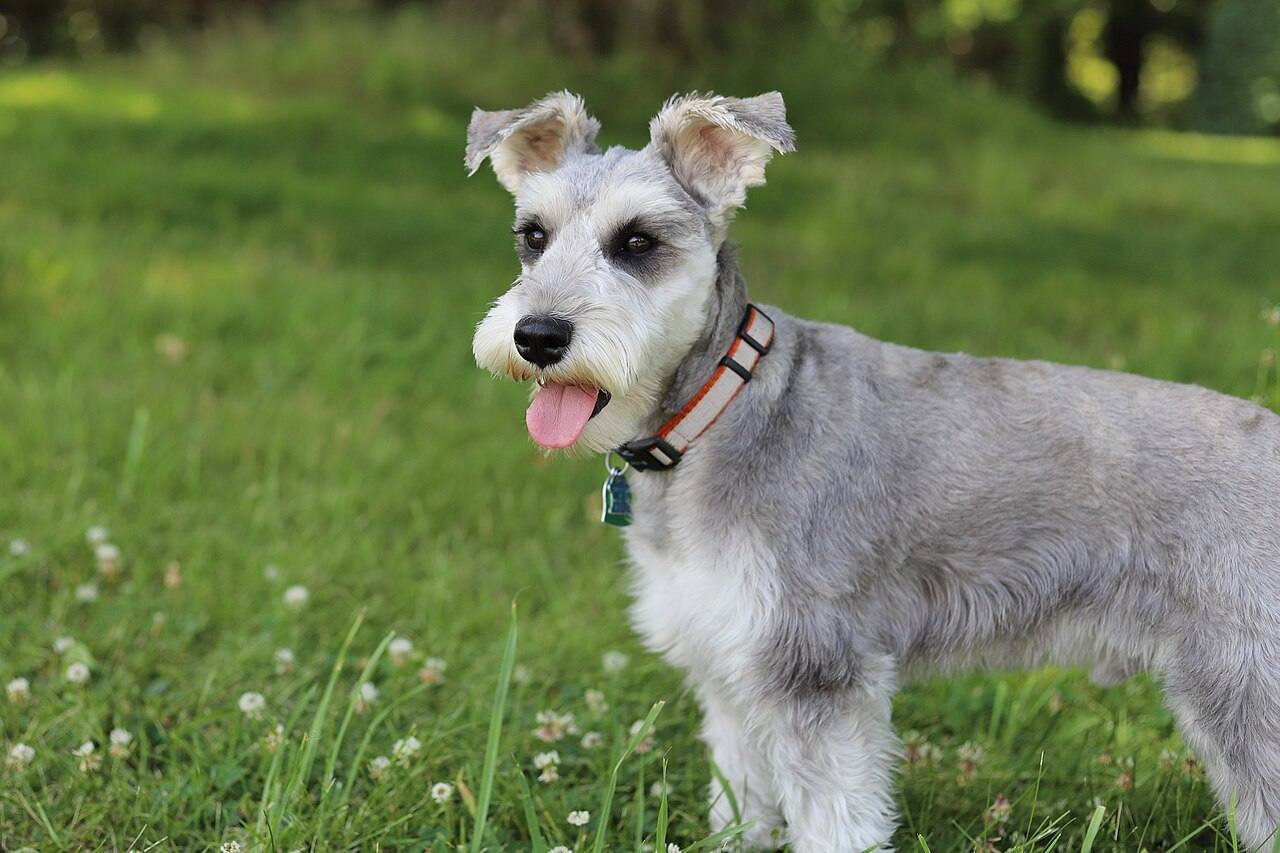
A sturdy, cheerful, bearded little companion, bright, devoted, and happiest at the center of family life, and one of the sturdier small breeds in the records. The AKC lists life expectancy at 12 to 15 years, and a UK VetCompass breed study of 3,857 Miniature Schnauzers put median longevity at 11.6 years. The honest planning story is narrower than the marketing suggests: high blood fats and the pancreatitis link are worth preparing for, while dental, weight, and ear care do most of the real work.
Enroll as a puppy, before any bloodwork flags high triglycerides or a vomiting episode is recorded as pancreatitis, because both become pre-existing exclusions once they are noted.
Cost figures are typical ranges, not quotes or guarantees. Your premium depends on your miniature schnauzer's age, your zip code, and the deductible and reimbursement level you choose.
Common health issues in Miniature Schnauzers
Pancreatitis and high blood fats
Risk level: Common / expensive
High blood fats run quietly in this breed. In a US lab study of 192 healthy Miniature Schnauzers, 32.8% (63 of 192) had triglycerides above the reference range, compared with 5.3% of control dogs, and the share rose with age to about three in four dogs over 9 years. UK owners rarely report a diagnosis, at 1.0% overall and 3.3% over age 9 in a 2026 survey of 2,910 dogs, which suggests the condition is under detected rather than rare. The reason it matters is pancreatitis: in a case-control study, dogs with a history of probable pancreatitis were far more likely to have high triglycerides after recovery, at 71.0% against 33.0% in matched controls (odds ratio 5.0), an association, not proof of cause. Owners in that 2026 UK survey reported pancreatitis in 7.6% of dogs, yet 2013 UK primary care records did not show pancreatic conditions among the breed's common disorders, so the fair summary is a breed considered predisposed, with honest uncertainty about how often it strikes. Published consumer guides put an outpatient episode at about $500 to $1,000, and several days in hospital at $1,500 to $2,500 or more, printed here as guide ranges, not clinical data.
Bladder stones
Risk level: Common
Miniature Schnauzers form several kinds of bladder stone, and males are at higher risk than females. In University of Minnesota data, the odds that a stone from a Miniature Schnauzer was calcium oxalate were 11.8 times those for other breeds, 28.4% of the breed's submitted stones were calcium oxalate, and the mean age at diagnosis was 9 years. A later Minnesota Urolith Center review found the breed made up 18.0% of calcium oxalate submissions, 9.0% of struvite submissions, and 4.0% of urate submissions. The split matters for care: struvite stones in this breed are typically infection driven and can often be dissolved with diet and antibiotics, while calcium oxalate cannot be dissolved and needs removal. Published guides put a planned bladder stone surgery (cystotomy) at about $1,500 to $3,500.
Dental disease
Risk level: Common
The most common disorder in the large UK VetCompass breed study was periodontal disease, recorded in 17.4% of Miniature Schnauzers in a year (95% CI 15.7 to 19.1), ahead of obesity and overweight at 8.3%, anal sac impaction at 5.8%, vomiting at 5.1%, and ear infection (otitis externa) at 5.0%. The Royal Veterinary College summary of that study put the reassuring headline plainly: the breed did not appear predisposed to any common disorder. That makes the everyday work of care, teeth, weight, ears, and digestion, the place where most vet visits come from, and regular brushing, dental checks, and a planned cleaning when your vet advises one keep it manageable.
Hereditary eye conditions
Risk level: Common
Cataracts and progressive retinal atrophy (PRA) are this breed's inherited eye concerns, and screening, not a scary rate, is the honest story: no prevalence percent for either condition could be corroborated in two sources, so this page prints none. The breed's CHIC health testing program requires an eye exam by a board certified veterinary ophthalmologist and a cardiac evaluation, and hip evaluation is not a CHIC requirement for this breed. The British eye scheme names congenital hereditary cataracts, hereditary cataracts, and generalized PRA for the breed, with annual eye testing advised for breeding dogs. A DNA test exists for an early PRA form linked to a variant in the HIVEP3 gene, but the University of Minnesota notes that the available test screens that variant only and does not cover a second associated variant (PPT1), so a clear result does not rule out PRA risk. If cataracts badly cloud vision, published guides put surgery at roughly $2,700 to $4,500 per eye.
Liver shunt (congenital portosystemic shunt)
Risk level: Less common
A portosystemic shunt is an abnormal blood vessel that lets blood bypass the liver. In a Finnish screening study that tested 582 Miniature Schnauzer puppies, 58.0% of the breed's puppies born in that study year, a congenital shunt was found in 8 puppies, an incidence of 1.4%, compared with under 1.0% in the general dog population. All of the shunts found were outside the liver. Most shunts are found in puppies, but a US study found Miniature Schnauzers over represented among late diagnosed cases (relative prevalence ratio 6.3), so a shunt can occasionally surface in an older dog. Signs can be vague, including poor growth, disorientation after meals, and unusual tiredness, which is why a vet's workup matters early.
Schnauzer comedone syndrome
Risk level: Less common
A breed named skin condition in which blackheads and crusty bumps form along the middle of the back, thought to be an inherited defect in how the hair follicles develop. University of Minnesota dermatology guidance and Veterinary Partner describe the same picture: it appears in young adult Miniature Schnauzers, and it can be controlled with ongoing care but not cured. No trustworthy prevalence figure exists in any source found, so this page prints none. Persistent bumps along your dog's back are worth a vet's look and a note in the record, not alarm.
What does pet insurance cost for a Miniature Schnauzer?
Start from the $62.44/month national dog average (NAPHIA, 2024 data) as an estimate only; Miniature Schnauzers are a small breed (12 to 14 inches and 11 to 20 pounds per the AKC), so quotes often sit near that average, and there is no trustworthy breed-specific price to quote here. The value of a policy concentrates in one emergency pattern, a pancreatitis hospitalization, in surgeries that can land in the same year, bladder stone removal and cataract surgery, and in years of recurring dental and ear care, while the blood fat story is mainly a monitoring and diet story, not a claims story.
For context, the national average premium for dogs is roughly $62/month - but breed, age, and location move that number a lot. Estimate your premium with our cost calculator, or see the bigger picture in our lifetime cost projector, which compares a common emergency bill with and without coverage.
Dental care is a recurring cost for this breed, so it helps to know the numbers early. Our dog teeth cleaning cost guide breaks down the typical $300 to $700 cost of a routine cleaning and what can push a bill higher.
A fellow stone-forming breed keeps its own figures here. Our Bichon Frise insurance guide covers a small white companion whose bladder stone risk, dental story, and long life are told with its own numbers, kept separate from the Schnauzer figures above.
What to look for in a policy for a Miniature Schnauzer
- Enroll as a puppy, before any bloodwork flags high triglycerides or a vomiting episode is recorded as pancreatitis, because both become pre-existing exclusions once they are noted.
- Confirm that hereditary conditions are covered, because cataracts and progressive retinal atrophy are this breed's inherited core, and ask how eye surgery is handled.
- Check how pancreatitis and other digestive episodes are treated after a first claim, because some plans treat a recurring episode as the same condition or apply a separate limit.
- Choose a limit that could survive a bladder stone surgery plus a cataract surgery landing in the same year.
- Keep the deductible at a level you can pay on a hard day without hesitation - the policy only protects your dog if you can afford to use it.
Compare insurers for your miniature schnauzer
Typical plan options from major insurers:
| Insurer | Reimbursement | Annual limit | Waiting periods | Standout feature | Quote |
|---|---|---|---|---|---|
| Spot | 70%, 80% or 90% | $2,500 - unlimited | 14 days (accident & illness) | Preventive-care add-on available. | Get a quote |
| Trupanion | 90% | Unlimited payouts (no annual cap) | 5 days (injury) / 30 days (illness) | Per-condition lifetime deductible; direct vet payment option. | Get a quote |
| Embrace | 70%, 80% or 90% | $5,000 - $30,000 | No wait (accident) / 14 days (illness) / 6 mo (orthopedic, varies by state) | Deductible shrinks $50 each claim-free year. | Get a quote |
| Pets Best | 70%, 80% or 90% | $5,000 or unlimited | 3 days (accident) / 14 days (illness) / 6 mo (cruciate) | Wellness add-on; short accident waiting period. | Get a quote |
| Lemonade | 70%, 80% or 90% | $5,000 - $100,000 | No wait (accident, most states) / 14 days (illness) / 30 days (orthopedic) / 6 mo (cruciate) | Preventive packages; not offered in every state. | Get a quote |
| ASPCA Pet Health Insurance | 70%, 80% or 90% | Multiple annual-limit options | 14 days (accident & illness) | Preventive-care add-on available. | Get a quote |
| Figo | 70%, 80%, 90% or 100% | Up to unlimited annual max | 1 day (accident) / 14 days (illness) / 6 mo (orthopedic) | One of the few with a 100% reimbursement option. | Get a quote |
| Fetch | 70%, 80% or 90% | $5,000 - unlimited | No wait (accident) / 15 days (illness) / 6 mo (orthopedic) | Covers sick-visit exam fees. | Get a quote |
Plan options shown are typical ranges widely published by each insurer; details change and vary by state. Always confirm current terms on the insurer's website before enrolling. Quote buttons link directly to each insurer's website. We don't earn a commission on these links yet.
Other breed guides
- French Bulldog
- Labrador Retriever
- Golden Retriever
- German Shepherd
- Goldendoodle
- Dachshund
- Rottweiler
- Bulldog
- Cavalier King Charles Spaniel
- Shih Tzu
- Boxer
- Australian Shepherd
- German Shorthaired Pointer
- Pembroke Welsh Corgi
- Bernese Mountain Dog
- Border Collie
- Cocker Spaniel
- Yorkshire Terrier
- Great Dane
- Chihuahua
- Pug
- Havanese
- Boston Terrier
- Doberman Pinscher
- Vizsla
- Australian Cattle Dog
- Shetland Sheepdog
- English Springer Spaniel
- Belgian Malinois
- Rhodesian Ridgeback
- Bichon Frise
- Siberian Husky
- Cane Corso
- Dalmatian
- Chow Chow
- Akita
- Alaskan Malamute
Frequently asked questions
Is pet insurance worth it for a Miniature Schnauzer?
For most Miniature Schnauzer owners, yes - this is a breed where one major surgery can cost more than years of premiums. The math favors insurance most when the breed's common conditions are expensive, which is the case here.
When should I insure my Miniature Schnauzer?
As early as possible - ideally as a puppy. Conditions diagnosed before enrollment are excluded as pre-existing, and this breed's predispositions mean waiting is the expensive mistake.
What is the best pet insurance for Miniature Schnauzers?
There is no single best insurer for every dog - the right pick depends on your budget, your dog's age, and which conditions worry you most. Compare annual limits, orthopedic waiting periods, and reimbursement rates across the table above, then run real quotes. (BreedCover may earn a commission if you buy through our links.)